Visit
We walk the garden, test pressure and flow at the outside tap, and open the valve boxes to see what is already in the ground.
45–90 minutes · freeHow it works
Two weeks from first visit to handover is typical. There are no prices on this site because every garden is measured before it is quoted, so this page sets out what happens at each stage and how long it takes.
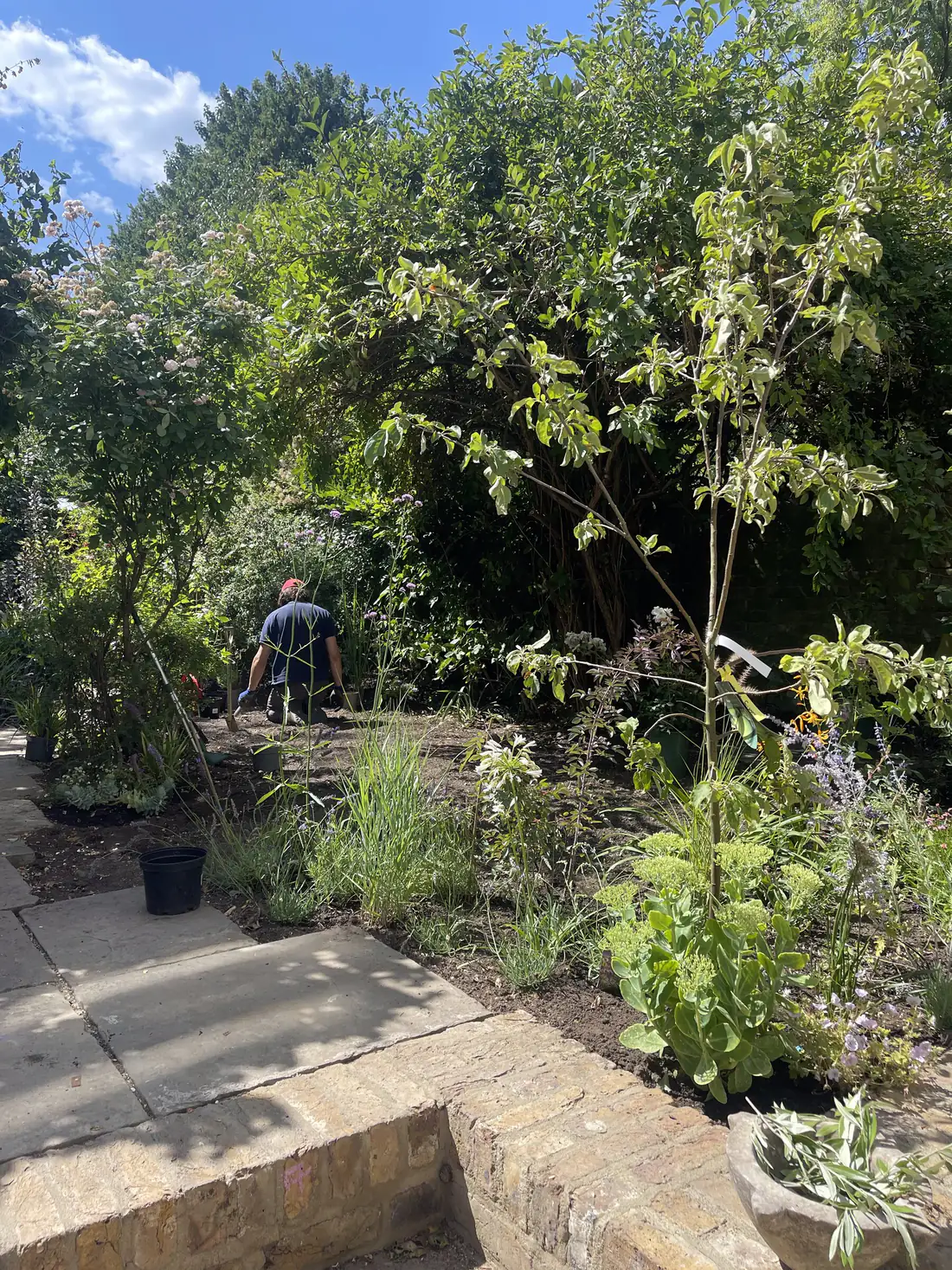
We walk the garden, test pressure and flow at the outside tap, and open the valve boxes to see what is already in the ground.
45–90 minutes · freeA zone-by-zone plan and a fixed written price, listing what is reused and what is replaced.
Within 3 working daysMost conversions take one day. Borders are worked by hand at the surface, turf comes up in strips and goes back over the line.
1–3 days on siteEvery zone run and pressure-checked with you present, the controller set up on your phone, and a zone plan drawing.
Same day as install01 / The visit
Free, 45 to 90 minutes depending on the size of the garden, and no obligation. Nothing needs preparing beforehand.
Static and dynamic pressure at the outside tap, and flow rate. Flow rate sets how many emitters can run on one zone, and therefore how the system is grouped. Many London gardens have less usable flow than expected, usually from a partly closed stopcock or an undersized supply.
Existing valve boxes and where their runs go, sleeving under paths, the controller position and its power supply, how the planting is grouped, aspect and shade, container positions, and whether the lawn is worth putting line under.
Whether what you have is permitted as it stands, convertible, or beyond saving. If it is compliant already, we say so and leave it alone.
We need access to the outside tap, the stopcock and any existing controller. If the garden is only reachable through the house, say so when you get in touch and we bring dust sheets.
02 / The install
We arrive between eight and nine and work through. A border conversion involves almost no digging, since the line is pinned at the surface and mulched over.
Most of a conversion happens at ground level, by hand, in among the planting.
Sub-surface line under a lawn means lifting turf in strips and relaying it, which knits back within a few weeks in the growing season. A new supply run where there is no existing sleeving means a narrow trench, and crossing a path may mean lifting a paving slab or two. Both are identified at proposal stage rather than on the day.
Commissioning uses water to flush the lines and check every emitter: a few minutes per zone, once. This is installation and testing rather than garden watering.
Tools out, offcuts and packaging taken away, paths swept, mulch put back over the line.
03 / Afterwards
The schedule matters as much as the installation, and it gets settled in the fortnight after the install.
Every zone is run with you present and pressure-checked, so you can see where the water goes. Emitters in the wrong position get moved during that run.
Set up on your phone before we leave, with a starting schedule for the season and the planting. We show you how to add a cycle and how to turn the system off.
A drawing of what is where: zones, valve box positions, run directions, controller settings. Keep it with the house paperwork for whoever works on the garden next.
New planting and newly converted borders need watching. Schedules are usually adjusted once after a fortnight, when it is clear which zones are running long and which short. That adjustment is included in the price.
A spring service and an autumn blow-down keep a drip system running. See servicing for what each visit covers.
Arrange a visit
Nothing is committed until you have a written proposal with a fixed price on it, which follows the visit within three working days.